Is the SMACO S700 Max Mini Scuba Tank Worth It? A Deep Dive Review
If you’ve been scrolling through social media or looking into compact dive gear lately, you've probably seen ads for those tiny mini-scuba tanks. They promise total underwater freedom without the hassle of heavy, traditional gear. But a lot of the older, tiny models (like the 0.7-liter ones) run out of air so fast.
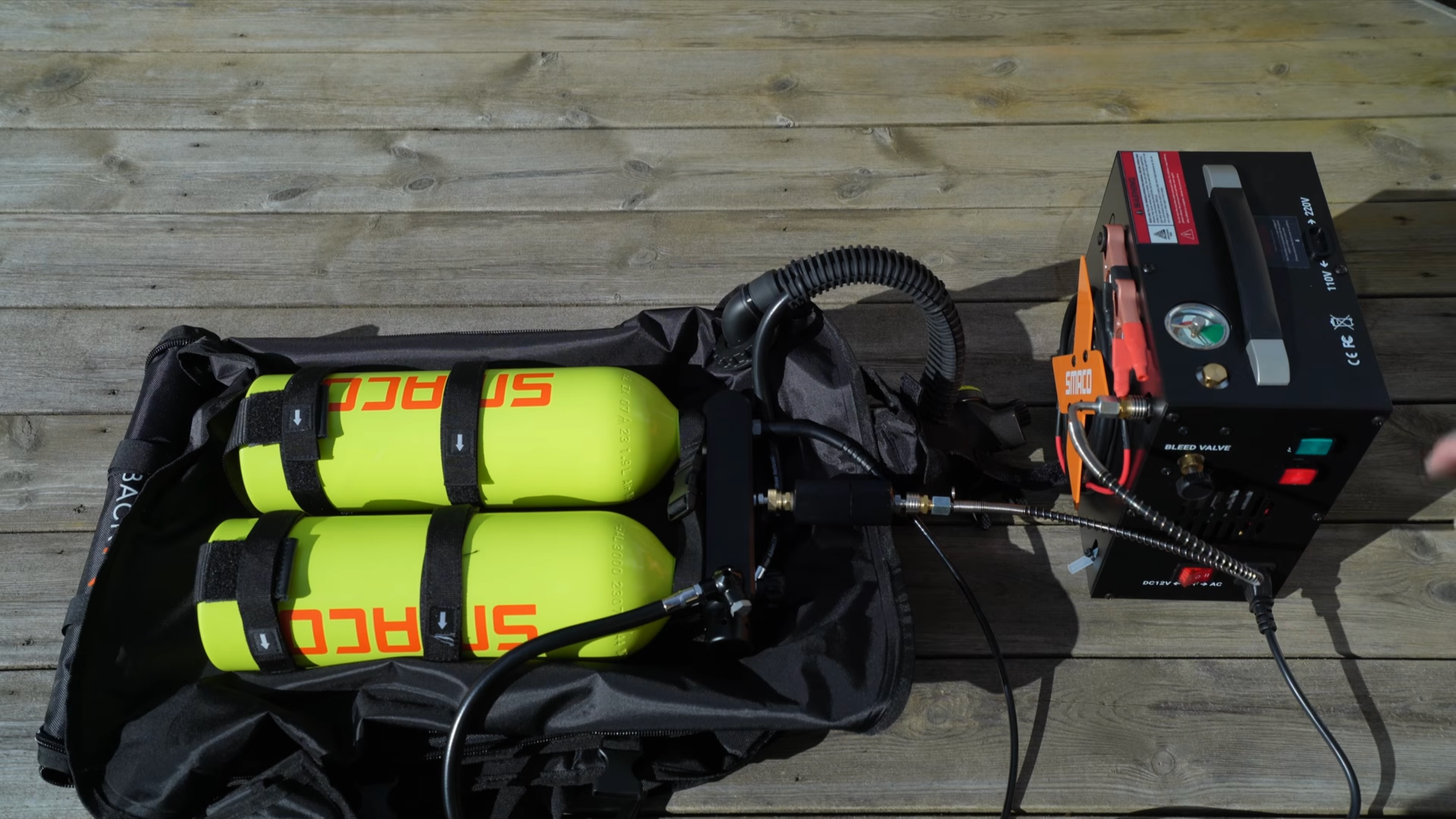
I’ve been testing out the Smaco S700 Max double scuba tank to see if a dual-tank system actually fixes that problem. I wanted to give you my honest, unbiased take on how it actually performs in the water, what I liked, and what you seriously need to watch out for.
The Air Time: What I Got Underwater
The biggest selling point of the S700 Max is that it links two 2-liter tanks together. Filled to 200 bars, that gives you 800 liters of air.
Smaco claims this can give you up to 30 minutes of breathing time at a shallow depth of about 5 meters. In my experience, that number is highly subjective. If you are completely relaxed, moving slowly, and keeping a steady breathing rhythm, you can definitely get close to that 30-minute mark. However, if you're fighting a current or swimming fast, your air consumption will spike, and that time will drop significantly. It’s a massive upgrade from a single tiny tank, but it’s still a relatively short window compared to a full-sized rig.
How the BCD Performs
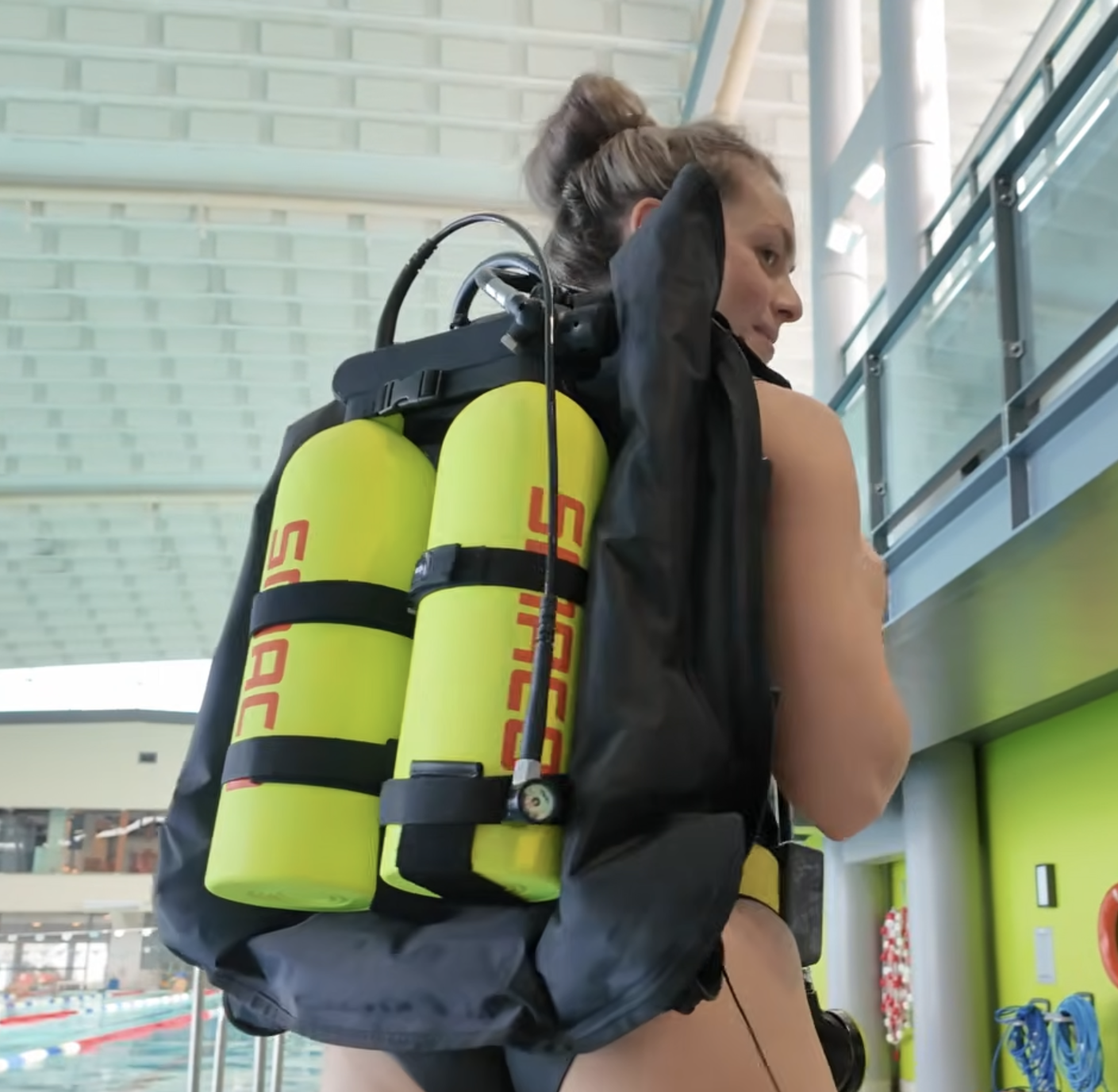
The standout feature for me is the integrated BCD (Buoyancy Control Device) vest. On cheaper mini-tanks, you usually just strap the cylinder to your back or chest and hope for the best, which makes controlling your depth not an easy task. With this setup, it feels like a proper, scaled-down scuba rig. The vest controls are straightforward:
To add buoyancy: You hit a button to inflate the vest with air from your tanks (or you can oral-inflate it).
To dump air: You press the release button or pull the manual shoulder strap to drop down.
Having a real BCD made a huge difference in how stable I felt underwater. It stops you from awkwardly fighting to stay at the right depth, which makes the whole experience a lot more relaxing.
The Non-Negotiable: Safety and Training
I need to step back from the gear for a second and give a very serious reality check based on how this equipment works. Because this setup gives you enough air to stay down for a while, it carries the exact same medical risks as a massive, industrial scuba tank.
If you take a breath of compressed air at 5 meters and panic-surface while holding your breath, the air in your lungs expands. In the worst-case scenario, your lungs can literally rupture. You also risk decompression sickness (nitrogen bubbles in your blood) if you don't understand how depth and time affect your body.
From my perspective, you must have a diving license or formal scuba training before using this. It might look like a casual snorkeling accessory, but the physics of breathing underwater don't care how small the tank is.
My Final Verdict
S
o, is it worth it? It depends entirely on what you want it for.
If you are already certified, or if you’re willing to invest in proper training, the Smaco S700 Max is a really fun, lightweight tool for shallow reef exploring, quick underwater photography, or even cleaning boat hulls. It feels professional and handles beautifully. But if you’re looking for a plug-and-play toy to hand to untrained friends at a pool party, this isn't it.
It’s a great piece of kit, but only if it's respected.
Smaco Diving Tanks Discount Code: MELANIE
I can set you in contact with the dealer in your area
SMACO S700 Max Buyer FAQs
Q: Do you need a scuba diving certification to buy or use the SMACO S700 Max?
Legally, anyone can purchase the tank online without showing a certification card (C-card). However, from a safety and physiological standpoint, you should never use this equipment without proper scuba training. Even at shallow depths of less than 3 meters, breathing compressed air carries severe risks of arterial gas embolism or lung over-expansion if you hold your breath while ascending. Treat this as real scuba equipment, not a pool toy.
Q: What is the true, real-world underwater breathing time for the S700 Max?
While marketing materials advertise up to 30 to 45 minutes of air, the real-world duration for an adult is typically 15 to 25 minutes. Safe dive time depends entirely on three factors: your depth, your lung capacity, and your stress levels. Your air consumption increases significantly the deeper you dive due to ambient pressure; a tank that lasts 25 minutes at the surface may only last 10 minutes at a depth of 10 meters.
Q: What are the options for refilling the SMACO S700 Max high-pressure tank?
Because the tank requires a massive working pressure of 3,000 PSI (200 Bar), you cannot fill it with a standard automotive tire pump or standard workshop air compressor. You have three main refill methods:
An electric high-pressure PCP compressor: The most practical home setup, filling the tank in about 15-20 minutes.
A scuba refill adapter: Connecting the S700 Max directly to a standard, full-sized 12L scuba cylinder to transfer pressure.
A high-pressure manual hand pump: Possible, but requires roughly 30 to 45 minutes of intense, exhausting physical exertion to reach maximum pressure.
Q: Will local commercial dive shops fill these mini scuba tanks for you?
Most traditional, certified dive shops (PADI/SSI) will refuse to fill mini scuba cylinders unless you can present a valid open-water diving certification. Furthermore, many shops lack the specific adapter fittings needed for miniature tank valves or decline due to liability insurance regulations regarding micro-tanks. Investing in your own PCP compressor or a larger donor tank adapter is highly recommended for independent use.
Q: Is the SMACO S700 Max safe for saltwater use, and what is the maintenance routine?
Yes, the tank is constructed from high-strength aviation aluminum and coated to resist corrosion. However, saltwater will rapidly degrade the regulator's internal seals and aluminum threads if ignored. After every single saltwater session, you must submerge the entire pressurized unit in clean, fresh water for 10 minutes, purge the regulator, and let it dry completely out of direct sunlight before storage.