Mo-Jet Electric Tender, Jetboard and bodyboard
Mo-Jet Discount Code: Melanie
Finding storage space for multiple water toys is a common challenge for boat owners and travellers. German manufacturer Mo-Jet attempts to solve this issue with a modular ecosystem: a single electric power module designed to swap between three different watercraft configurations.
How the Modular System Works
Rather than purchasing separate standalone electric watercraft, the Mo-Jet system relies on a central power unit that slides into different hulls depending on how you want to use it:
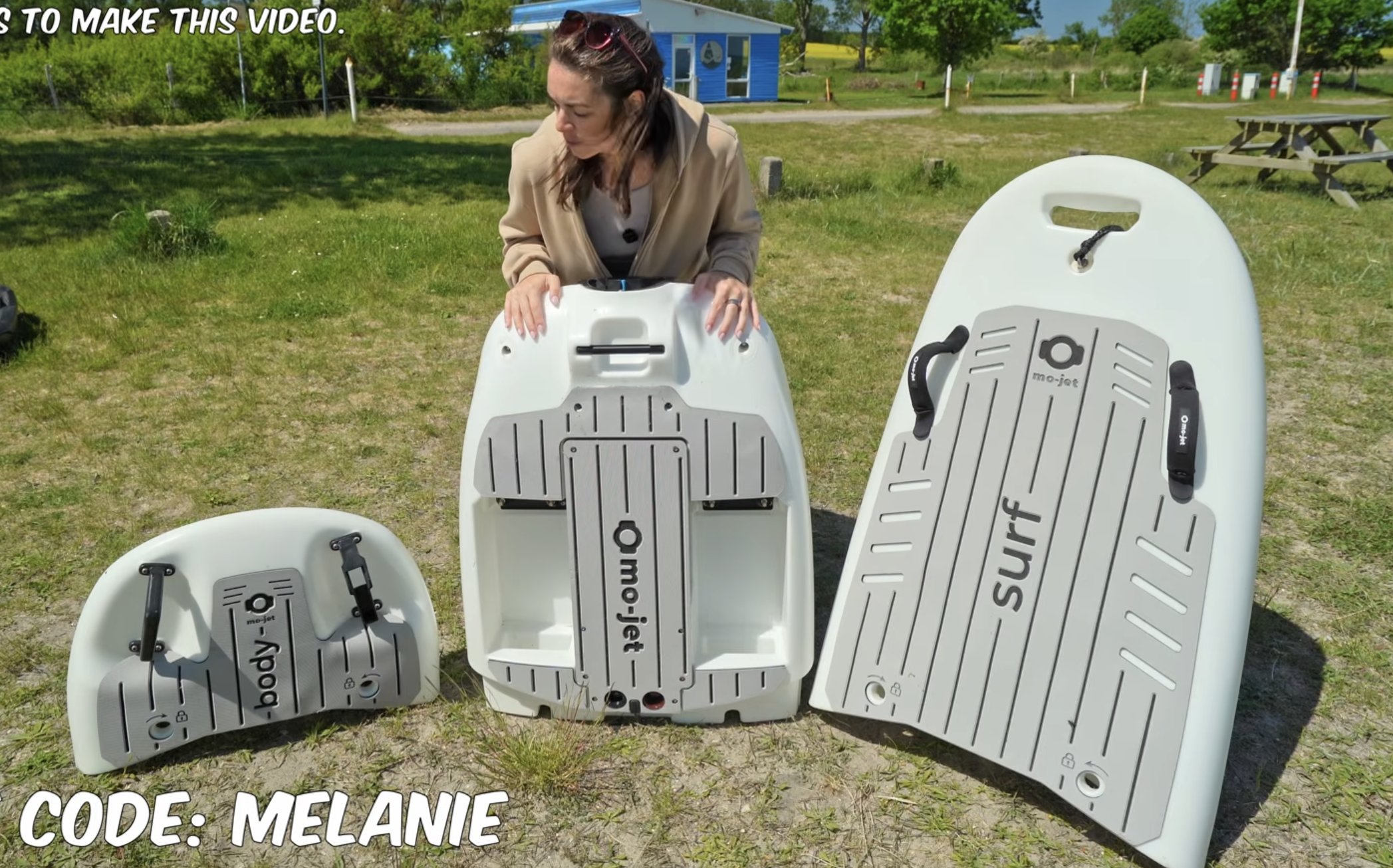
The Power Module: The core component containing an 11 kW (15 horsepower) electric jet pump drive.
The Bodyboard: A polyethilene shell that encloses the power unit for prone riding.
The Jetboard: A surfboard hull with steering fins for traditional stand-up jet boarding.
The Tender Boat: An inflatable hull that accommodates the assembled jetboard, converting the setup into a small utility dinghy.
When disassembled, the entire component bundle is compact enough to fit into the trunk of a standard vehicle without folding down the rear seats.
Assembly and Configuration Changes
Setting up the tender configuration takes roughly seven minutes. While an electric pump inflates the boat's Hypalon hull, the user drops the power and surf modules into the centre slot and attaches the mechanical steering linkage to the jet nozzle. The completed assembly weighs under 40 kilograms (88 pounds), allowing it to be carried to the water by two people.
Switching between modes requires removing two thumbscrews and disconnecting the steering device. Once released, the power unit can be transferred from the boat hull into either the bodyboard or surfboard shells.
Specifications, Battery Life, and Performance
The propulsion system is powered by two 1-kilowatt batteries (2 kW total). During our testing, this configuration delivered approximately 20 minutes of runtime. Mo-Jet has noted that upgraded batteries with 50% more capacity in the same physical size are scheduled for release this autumn. Additionally, a larger 4 kW battery system is available, which provides extended runtime and enough torque to tow a wakeboarder.
In terms of speed, rough water conditions limited our top-speed testing for the tender configuration. However, on the standalone jetboard, an 80 kg rider achieved a maximum speed of 42 km/h (approximately 26 mph). The bodyboard configuration offers a different ride profile, prioritising quick acceleration due to the rider's low position on the water.
Materials and Controls
The rigid hulls are constructed from polyethylene plastic. This choice of material adds durability and allows owners to perform basic repairs at home using plastic-welding techniques rather than relying on specialised fiberglass repair shops.
System operations are managed via a universal wireless remote control. The remote features a standard trigger throttle, an integrated safety kill-switch lanyard, and an LED screen displaying real-world power consumption and battery percentages.
Final Thoughts
The tender hull featured in the demonstration is a prototype, with refined production models expected later. Overall, the system offers a practical alternative for users looking to maximise utility without managing multiple large pieces of equipment. While the battery life on the standard cells is relatively brief, the modularity provides a functional compromise between a utility transport boat and recreational water toys.
Mo-Jet Discount Code: Melanie
I can set you in contact with the dealer in your area
Mo-Jet Discount Code: Melanie
Mo-Jet Modular System: In-Depth Buyer FAQs
Q: How exactly does the Mo-Jet modular swapping system work, and do you need tools?
The core of the entire system is the Mo-Jet Powerbox, which contains the 14 kW (19 hp) motor, electronics, and dual-battery bays. To transform the device, you slide the Powerbox into different front-end modules (such as the rigid Surf hull, the compact Bodyboard nose, or the inflatable Tender kit). The components lock together in less than 30 seconds using a heavy-duty, marine-grade pin and latch mechanism. No specialised tools are required on the beach to completely switch your water toy from a 55 km/h jetboard into a family-sized inflatable dinghy.
Q: Why does the Mo-Jet use two separate batteries instead of one single power pack?
The dual-battery architecture was engineered specifically to solve two major pain points in the luxury electric water toy market: transport weight and charge times. Instead of one massive, back-breaking 30 kg lithium battery pack, the Mo-Jet splits the capacity across two independent, plug-and-play batteries weighing less than 18 kg each. This makes carrying the Powerbox down to the shoreline significantly easier for a single person. Furthermore, because they operate on separate circuits, you can plug them into two standard power outlets simultaneously to achieve a complete super-charge in just 60 to 90 minutes.
Q: What is the real-world performance and top speed of the Mo-Jet across different modules?
Driven by an aggressive jet pump delivering 100 kg of static thrust, the system behaves like a high-performance personal watercraft.
Surf and Body Modules: In the rigid, virtually indestructible polyethylene (PE) surf or bodyboard configurations, the Mo-Jet can rocket an adult rider up to a blistering top speed of 55 km/h with roughly 30 to 40 minutes of continuous full-throttle runtime.
Tender Module: When locked into the inflatable PVC Tender 180 or 238 boat covers, it acts as an electric go-kart on the water, providing incredible low-end torque to pull a wakeboarder or comfortably ferry two adults back and forth from a yacht.
Q: What makes the Mo-Jet’s hull material superior to traditional fiberglass or carbon fiber boards?
The Mo-Jet modules are manufactured from a specialized, torsion-resistant Polyethylene (PE) material rather than standard fiberglass or carbon composites. While carbon fiber is lighter, it is highly prone to cracking or spider-webbing if knocked hard against a rocky shoreline, a concrete boat ramp, or a yacht's swim platform. The PE construction makes the Mo-Jet virtually indestructible—it is highly impact, shock, and puncture-resistant, allowing you to run it onto gravel or share it with rental clients and family without worrying about structural hull damage.